Rhode Island women were not shy about participating in protests against the British Acts that were imposed on the colony. The “Daughters of Liberty” held their spinning bees out in the open. Boston’s famous Tea Party, however, had its participants hiding their identifies with costumes. Providence women (and men) did their protests out in the open. They even announced the coming Tea protest through the Town Cryer.
On Thursday last, about twelve o’Clock at noon, the Town Cryer gave the following notice through the Town:
“At five of the Clock, this Afternoon, a Quantity of India Tea will be burnt in the Market Place. All True Friends of their Country, Lovers of Freedom, and Haters of Shackles and Hand Cuffs, are hereby invited to testify their good Disposition, by bringing in, and casting into the Fire, a needless herb, which for a long time hath been highly detrimental to our Liberty, Interest and Health. “
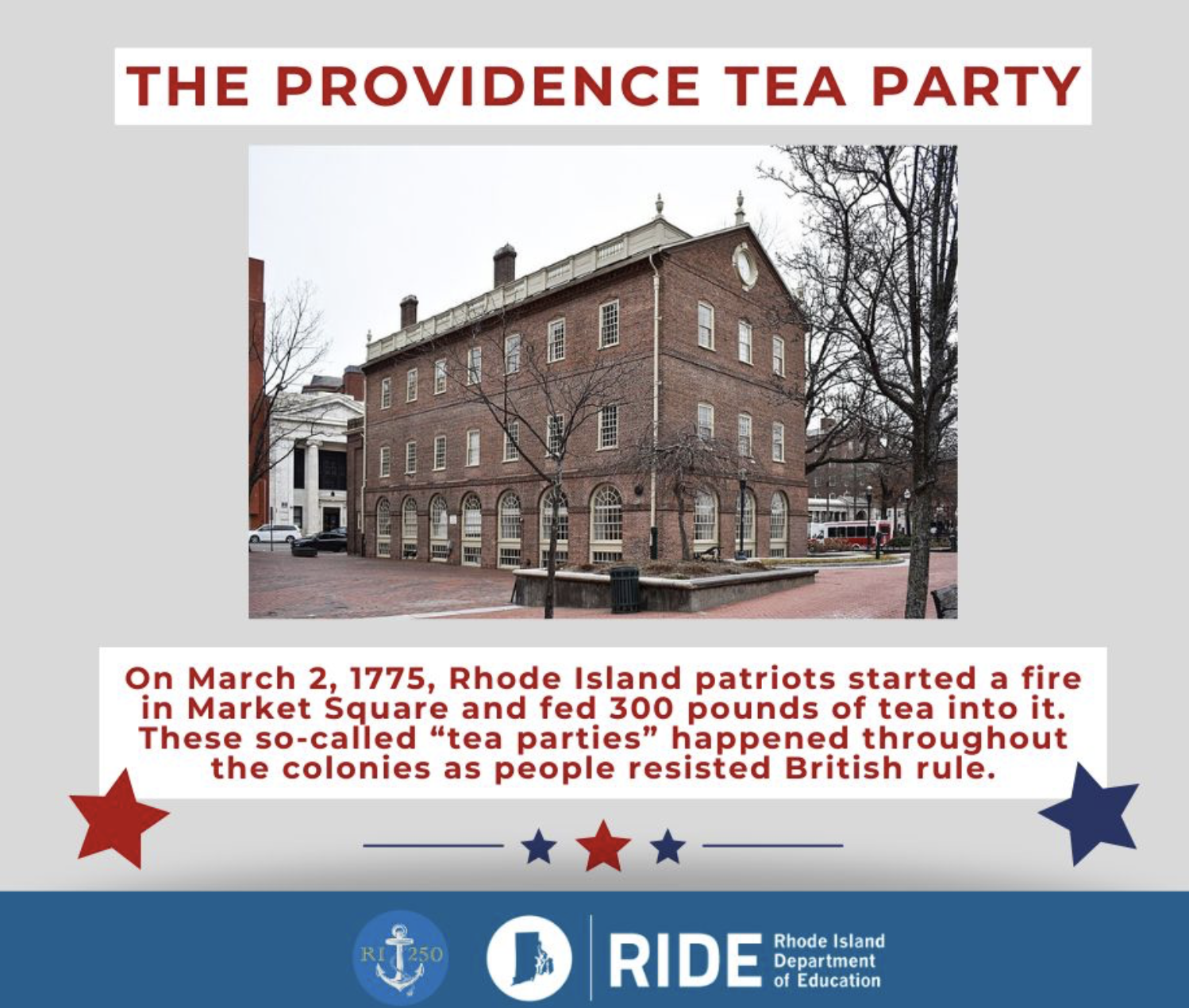
The crowd did gather at the Providence’s Market Place and a fire of tar was lit. Three hundred pounds of tea were cast into it as well as Lord North’s Speech and other obnoxious documents.
“Many worthy women, from a conviction of the evil tendency of continuing the habit of tea drinking, made freewill offerings of their respective stocks of the hurtful trash.”
While the tea was burning, Sons of Liberty went along the street and painted over the word TEA on shop signs. Bells tolled to celebrate the funeral of Madam Soughong – Tea from China that had found its way to America.
Why was the tea so despised? Parliament had repealed most of the Townshend duties, but they kept the tax on tea to prove that they had authority over the colonies. The British tried to rescue the British East India Company by giving it permission to sell tea directly to the colonies. That lowered the price of tea, but the tax on tea still represented the authority of the British.
Quotes are from the Providence Gazette (Providence, RI), March 4, 1775
In 1780 Sarah Osborn of Newport dictated a letter to her friend Joseph Fish that gives us a glimpse of life during the British Occupation. In describing how she fared during that turbulent time, Sarah depended on God to get her through. “The strength and courage I mentioned, which God graciously granted me in times of danger; was not the result of any confident persuasion, that I should not be slain. – No! When the bullets were whizzing around me, I realized the next might have a commission to reach me; ….I know every shot was directed by unerring wisdom and every heart of the enemy, as much at his control…thus I rested on God.”
Throughout her adult life, Sarah “rested on God.” She was in her 60s and plagued with infirmities when the British invaded Aquidneck Island in 1776. With the Occupation of the British came hardships for the residents of Newport. The British destroyed property, turned homes into barracks, confiscated the crops and livestock of the people, and impoverished the town because of their blockade of ships and the ruin of maritime jobs and commerce. Forty percent of the residents fled, but Sarah and the poor of Newport had nowhere to go.
Yet, it was reported by Sarah’s pastor Samuel Hopkins in his memoirs that: Sarah had a constant supply of the necessaries of life and she received no abuse from the British soldiers as most others said. “ by her and others, that they made less disturbance and noise, than they did elsewhere; and were particularly careful not to do anything on the Sabbath to disturb that good woman, as they called her. And they took care to avoid all profane words when near her.”
What was special about Sarah and why was she known as “that good woman?” Sarah’s maiden name was Haggar. She was born in England but came to America as a child. She married at seventeen to a sailor named Samuel Wheaten who died at sea leaving her as a young widow with a baby to support. Sarah supported herself as a teacher and she opened a day school and then a boarding school. She was influenced by the “Great Awakening” when revival spread through the preaching of George Whitefield and Gilbert Tennent in the 1730s and 1740s. This revival promoted the idea of personal relationships with God. Sarah was always praying for her loved ones and church friends to have that conversion experience to be saved.
Sarah’s life wasn’t an easy one. Sarah married a widower, Henry Osborn, who had three children to add to the household. She was always poor, but she considered her dependence on God as a good reason not to resent her poverty. She constantly wrote about her spiritual journey and was one of the few women who was published at that time. She started a woman’s ministry at the Congregational Church she attended. Sarah never took the role of a pastor, but she was a charismatic speaker who hosted up to 500 people at her meetings. She hosted separate meetings for women, for men, and for freed and enslaved African Americans. Sarah’s view of slavery was influenced by the opinions held at the time. Slavery was accepted by Sarah as the norm and even as biblically permitted. When her son Samuel died, Sarah’s friends gave her an enslaved boy infant to raise. Sarah maintained a good relationship with his mother until she contemplated selling him to pay her debts. Sarah did not sell him in the end. Perhaps the influence of her pastor Samuel Hopkins changed her mind about slavery. Hopkins published her Memoirs and some of her diaries so that we know about Sarah today.
As a British born woman, Sarah regularly prayed for the King, but with the experience of the Stamp Act, Coercive Acts and Boston Massacre, she and her church family rallied behind the Patriot cause. The minister, Samuel Hopkins, hosted close to 80 women spinning at the rectory to facilitate sewing homespun instead of fashionable clothes. Sarah would later call the English “the enemy” in a letter to a friend. With the destruction of their church building, Sarah’s humble quarters served as a center for activity.
Sarah rested in God and she was grateful for the provisions He made for her. Even the British soldiers could sense her goodness.
Sarah Osborn’s World by Catherine Brekus is a great source of information on Sarah.
Christian McBurney’s book Spies in Revolutionary Rhode Island, presents some evidence that women might have played the roles of spies in Revolutionary Rhode Island.
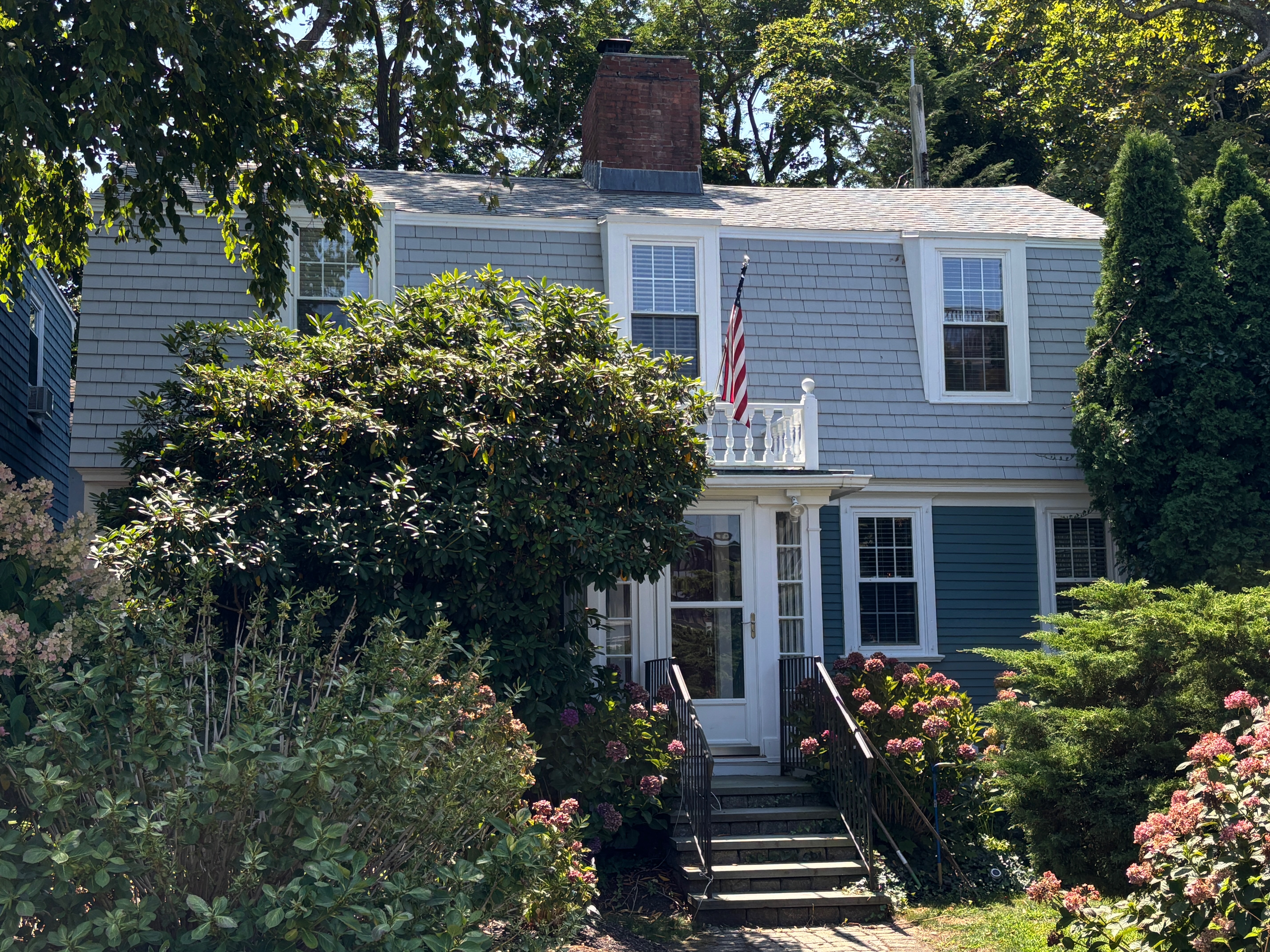
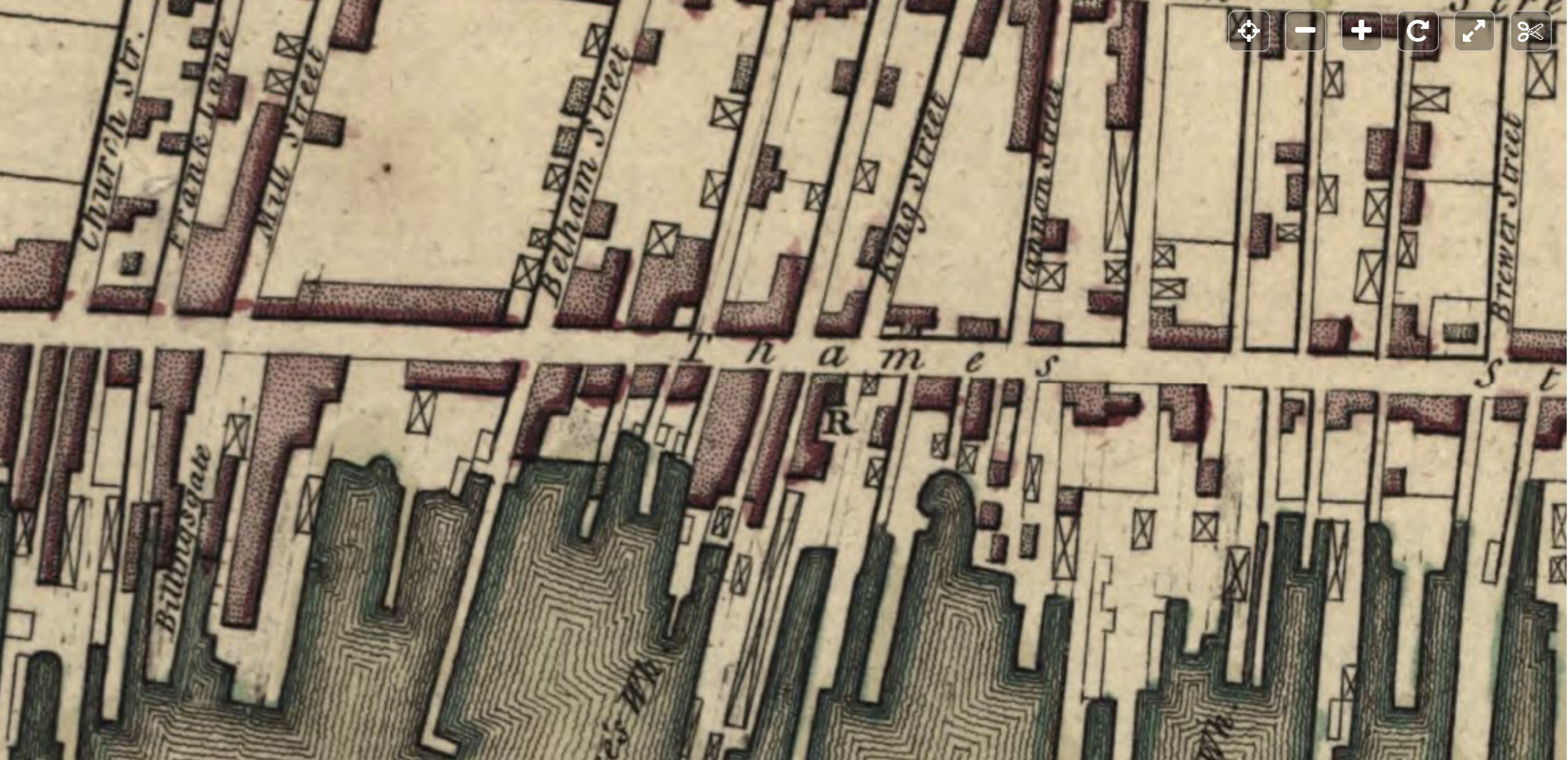
Mary Gould Almy was very open about her Loyalist sympathies and in his book McBurney includes a document apparently written by a French officer on August 23, 1780. In the document the author writes that a group of people meet at a rooming house on Thames Street near a wharf. Mary’s rooming house might meet the description. The officer portrays the keeper of the rooming house being a “widow” (which Mary Almy was not) but if her husband was away she might seem to be alone with her children. In her journal Mary Almy states that she has a son in New York and in this document the officer describes a young man coming regularly from New York and spending a day or two before leaving. The British were in control of New York at that time. When the young man arrives a group of men meet in a guarded room upstairs in the house. These meetings occur regularly.
McBurney includes the story of Mary Wenwood who was secretly sending information to the British about the strength of the American forces and their supplies in Massachusetts in 1775. Mary Wenwood traveled from Cambridge, Massachusetts to Newport and asked her former husband Godfrey Wenwood to pass a letter to British Captain Wallace of the ship Rose. Mary thought her ex-husband was a Loyalist and that she could trust him, but he showed the coded letter to Ezra Stiles and others who allied themselves with the Patriots. Two months later Mary asked her former husband about the letter “to her sister” and why it hadn’t been delivered. He realized that the author of the letter had to be working for the British. The letter was passed on to Henry Ward the Rhode Island Secretary of State and then on to Nathanael Greene and ultimately George Washington. Washington sent for Mary and under duress she told him that Dr. Benjamin Church was the author. Church had fooled everyone. He was a member of the Sons of Liberty in Boston and worked closely with Washington, John and Samuel Adams and John Hancock. Church was arrested and found guilty of treasons. After his release made his way to the Carribean. The story is John Nagy’s book, Dr. Benjamin Church, Spy.
From Blaskowitz Map of Newport – area of Mary’s Rooming House near Pelham Street and Thames.
I am collecting stories about Rhode Island women in Revolutionary times – Protests, Occupation, Battle, French Era to war’s end. The new RIDE Social Studies standards for grade four requires students to: “Explain the roles Rhode Island women fulfilled during the American Revolution.” So I am collecting stories of Rhode Island women during that time period and reflecting on the roles of women. I will try to write their stories for a fourth grade audience as a resource for teachers.
I am starting with a host of stories I have already researched:
Loyalist and spy Mary Gould Almy
Women who pitched in to run their farms and businesses while their husband fought.
Christian Bannister enduring the Occupation and trying to remain neutral.
Daughters of Liberty who spun their protests before the war
Elizabeth Heffernan whose householdings were destroyed by the British Occupation
Catherine Littlefield Greene who followed husband Nathanael Greene to the camps.
I am encountering a few who are new to me like the Holmes women of Middletown who fought to protect their property and runaway servant to served as a spy. I would appreciate hearing any stories of Rhode Island women that would help us understand all the roles they played in wartime.
Some general thoughts from Gladys Bolhouse’s article on “Women and the Battle for Rhode Island.”
With the Occupation, women on Aquidneck Island were cut off from the rest of the state and even each other on the island.
For safety sake many families had to move away from everything they had here. Those who had no resources to relocate had to to remain under the control of the enemy.
Bolhouse goes on to relate passages from Mary Gould Almy’s diary of the Siege – and I will work through that with the next blog.